
What Does Fermented Tea Taste Like? Sensory Guide to Pu-erh, Kombucha & Dark Teas
✨ This article was AI edited. Editorial responsibility: OriginalEating.com.
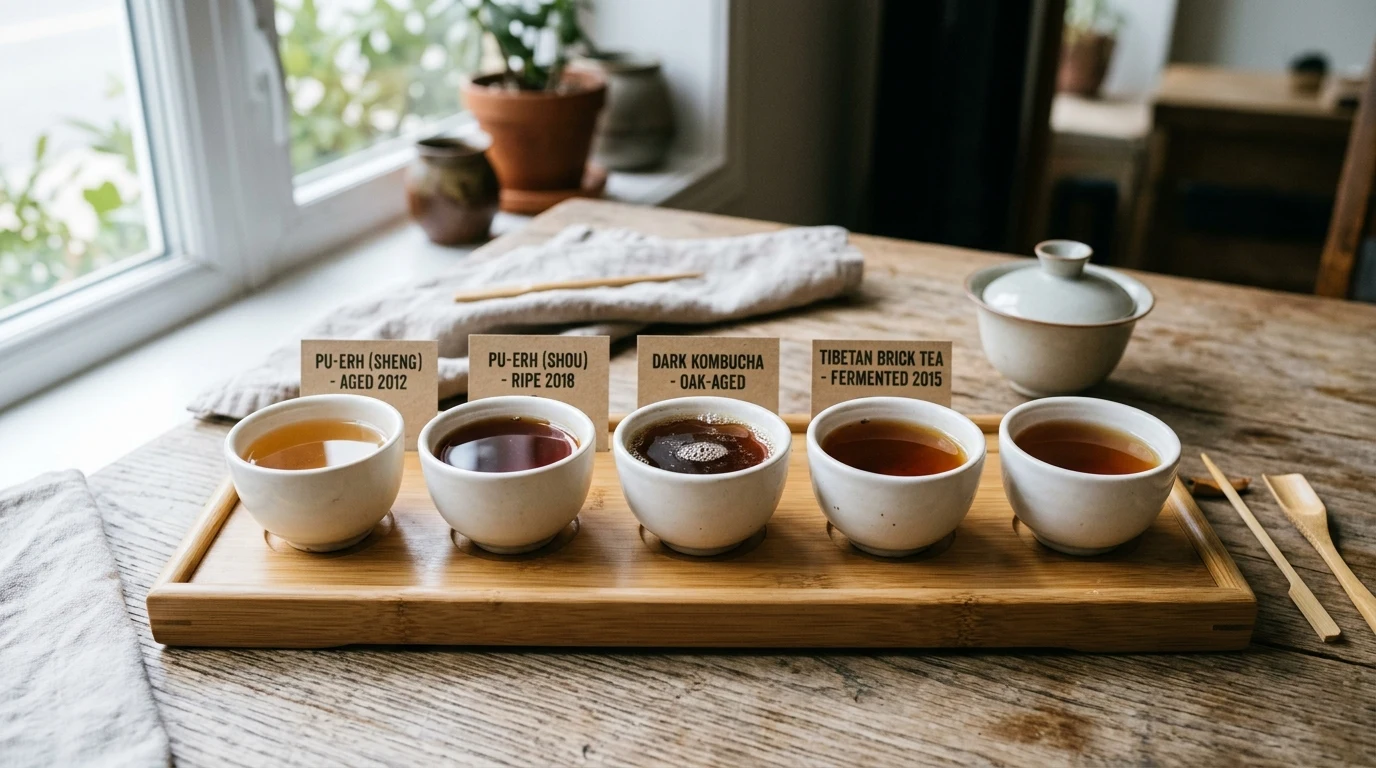
Fermented tea tastes intensely varied depending on whether it is microbially fermented (such as aged Pu-erh and dark hei cha) or yeast-and-bacteria brewed (such as kombucha). Microbially fermented leaf teas taste deeply earthy, woody, mellow, and reminiscent of damp forest floor, autumn leaves, and sweet dried dates with zero astringency, whereas liquid-fermented kombuchas deliver a tangy, effervescent, cider-like sharpness balanced by natural fruit acidity and pleasant vinegar sweetness.
For tea connoisseurs and adventurous palates venturing beyond standard unfermented green or oxidized black teas, the universe of fermented tea presents an astonishing sensory journey. In the Western lexicon, the word “fermentation” was historically used as an inaccurate synonym for enzymatic oxidation (the chemical browning of black tea leaves). However, authentic fermented tea—known in traditional Chinese culture as Hei Cha (Dark Tea) or across global beverage markets as Kombucha—undergoes true microbial transformation mediated by fungal colonies, yeasts, and beneficial bacteria.
Contents
The Two Master Families of Fermented Tea: Leaf vs. Liquid Fermentation
To accurately describe how fermented tea tastes, one must immediately separate solid post-fermented tea leaves from live symbiotic beverage ferments. Both undergo profound biochemical transformation, but their flavor architecture and organic acid profiles diverge completely.
| Tea Variety | Primary Microorganisms Involved | Dominant Tasting Notes | Mouthfeel & Astringency |
|---|---|---|---|
| Ripe Pu-erh (Shou Cha) | Aspergillus tubingensis, Rhizopus, Blastobotrys | Rich damp earth, dark peat, cocoa, aged cedar, dried Chinese dates (jujube) | Thick, velvety, brothy, completely devoid of bitterness |
| Raw Pu-erh (Sheng Cha – Aged) | Slow, aerobic wild fungal/yeast aging over 10–30 years | Dried apricots, camphor, wildflower honey, sweet tobacco, resinous pine | Evolving astringency, long-lasting sweet cooling finish (Hui Gan) |
| Fuzhuan Brick Tea (Golden Flora) | Eurotium cristatum (“Golden Flowers”) | Pine needles, forest mushrooms, toasted grains, distinct golden floral sweetness | Smooth, warming, exceptionally soothing on the stomach |
| Classic Raw Kombucha | Komagataeibacter, Brettanomyces, Saccharomyces | Green apple cider, tart lemon zest, vinegar bite, fermented honey sweetness | Bubbly, prickly, effervescent, refreshing and palate-cleansing |
Why Fermented Tea Lacks Harsh Bitterness and Tannic Pucker
If you have ever accidentally over-steeped a commercial green or black tea, you are undoubtedly familiar with the harsh, dry, tongue-drying pucker known as astringency. This mouth-drying sensation is produced by free polyphenolic catechins binding directly with salivary proteins in your oral cavity.
During the microbial post-fermentation of leaf teas (such as the wet-piling process called Wo Dui in Yunnan, China), fungal enzymes produced by Aspergillus and other beneficial microorganisms systematically break down harsh monomeric catechins into complex polymeric theabrownins and thearubigins. These larger, complex molecular polymers do not bind aggressively with salivary proteins. Consequently, authentic fermented ripe Pu-erh can be boiled for 20 continuous minutes without ever developing the sharp bitterness associated with common teas.
Detailed Sensory Breakdown: What to Expect on Your First Sip
1. The Earthy & Humic Spectrum
The most shocking sensation for beginners is the profound sensation of damp forest soil. High-grade Shou Pu-erh evokes images of walking through a primeval pine forest after a warm autumn rain. This is not dirtiness; it is geosmin and microbially transformed polyphenols delivering an ancient, grounding, and deeply comforting umami richness.
2. The Sweet Retronasal Finish (Hui Gan)
In traditional Chinese tea appraisal, great emphasis is placed on Hui Gan—the lingering sweetness that rises back up into the throat and nasal passages several seconds after swallowing. While the initial sip of aged raw Sheng Pu-erh may feel brisk and camphor-like, within 15 seconds your saliva turns remarkably sweet, coating your palate in a nectar-like cooling mist.
3. The Bright, Effervescent Acid Sparkle (Kombucha)
When sipping live fermented liquid kombucha, the predominant sensations are acetic acid, gluconic acid, and natural carbonation. Gluconic acid provides a soft, rounded, wine-like fruit acidity, while acetic acid gives the beverage its punchy, thirst-quenching tang reminiscent of sparkling cider or craft sour ale.
How Brewing Parameters Shape the Flavor Profile
To extract the most pleasant flavors while avoiding flat or overly intense infusions, follow these expert preparation rules:
- Rinsing the Leaves: Always perform a 10-second “awakening wash” with boiling water for aged dark teas and Pu-erh cakes. Discard this initial rinse to wash away resting tea dust and allow tightly compressed leaves to unfurl cleanly.
- Water Temperature: Use full 212°F (100°C) boiling water for dark fermented leaf teas. Because there are no fragile unoxidized catechins to scorch, boiling heat is essential to unlock rich theabrownins.
- Gongfu vs. Western Steeping: Using a small clay teapot or gaiwan with high leaf-to-water ratios (7g per 100ml) and brief 10–20 second infusions yields a clean, luxurious, and layered tasting experience, allowing you to enjoy 10 to 15 distinct steepings from a single serving of leaves.
Frequently Asked Questions About Fermented Tea Taste
Does fermented tea taste like vinegar or mold?
Quality fermented tea never tastes like unpleasant mold or rot. High-grade dark teas like Pu-erh taste rich, woody, nutty, and soothingly earthy, while properly brewed kombucha has a tart, fruity cider tang without harsh vinegar burns.
Is black tea the same as fermented tea?
No. Standard Western black tea is oxidized enzymatically through exposure to air, with no microbial involvement. True fermented teas (such as Pu-erh, Dark Hei Cha, and Kombucha) require live bacteria, yeasts, and molds to digest and transform leaf compounds.
Why is fermented tea so gentle on sensitive stomachs?
Microbial fermentation dramatically reduces unfermented tannins and acidity in tea leaves, converting harsh catechins into gentle theabrownins and producing alkaline organic metabolites that soothe rather than irritate the gastric lining.
Get our latest guides, news, and insights highlighted in your Google Search & AI Overviews.


