
The Ultimate Guide to Cordyceps Tea: Medicinal Benefits, Energy, and How to Brew It
✨ This article was AI edited. Editorial responsibility: OriginalEating.com.
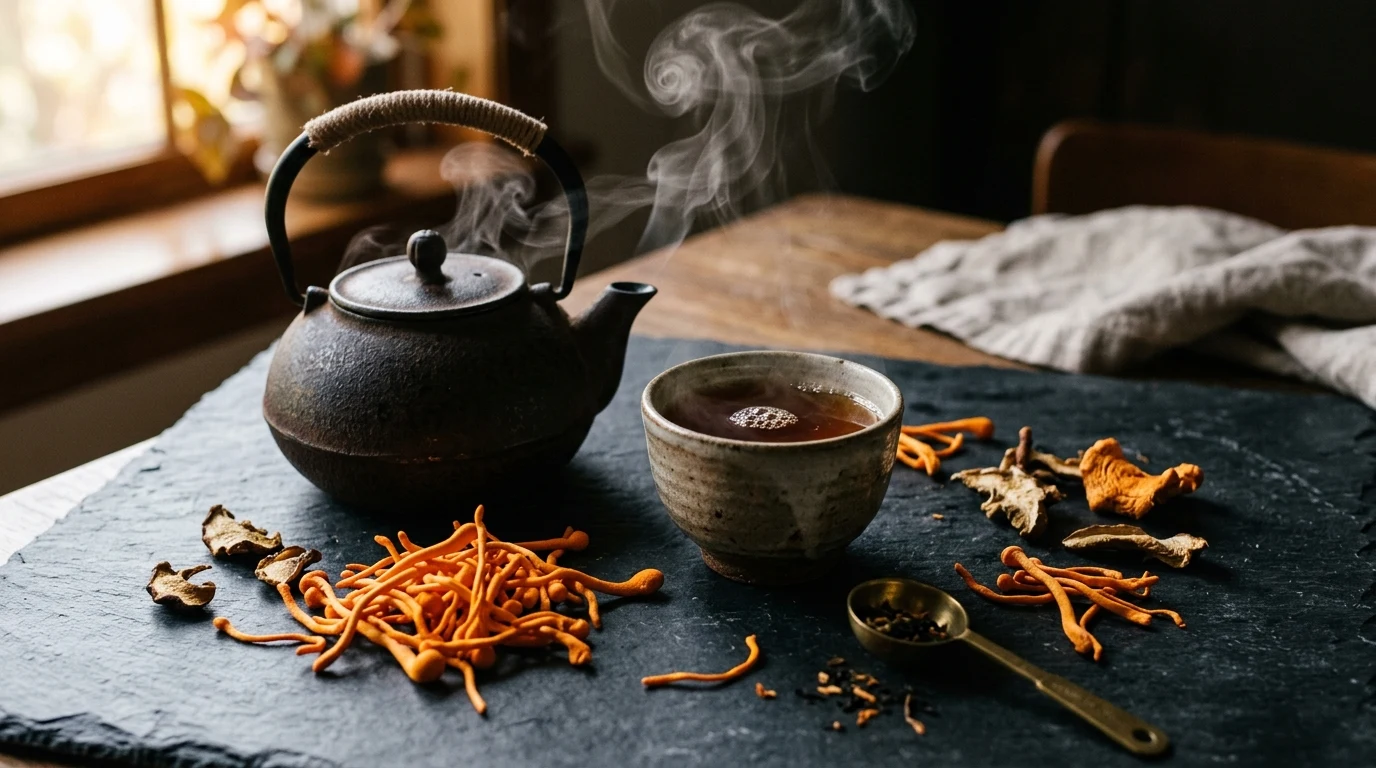
Cordyceps tea is a therapeutic medicinal mushroom infusion prepared by gently simmering cultivated Cordyceps militaris fruiting bodies or wild-harvested cordyceps mycelium in hot water, extracting high concentrations of bioactive cordycepin (3′-deoxyadenosine), adenosine, and beta-glucans to support cellular ATP energy generation, improve oxygen utilization (VO2 max), and promote respiratory endurance without caffeine crashes.
For centuries reserved exclusively for imperial dynasties across high Tibetan plateaus, cordyceps has evolved from esoteric ancient folk medicine into one of the most rigorously researched natural ergogenic adaptogens in sports physiology and functional longevity medicine. Unlike central nervous system stimulants such as caffeine or guarana that trigger adrenal catecholamine surges, consuming cordyceps tea directly optimizes cellular mitochondrial bioenergetics.
Contents
- Cordyceps Sinensis vs. Cordyceps Militaris: Modern Taxonomy Explained
- Key Health Benefits Backed by Clinical Science
- Complete Guide: How to Brew Potent Cordyceps Tea at Home
- Optimal Dosage, Cycling, and Timing Recommendations
- Contraindications and Safety Information
- Frequently Asked Questions About Cordyceps Tea
Cordyceps Sinensis vs. Cordyceps Militaris: Modern Taxonomy Explained
When shopping for cordyceps or preparing homemade tea, consumers are frequently confronted with two primary species designations. Discerning the biochemical and ethical differences ensures ethical procurement and verified potency:
| Attribute | Wild Cordyceps Sinensis (Ophiocordyceps) | Cultivated Cordyceps Militaris |
|---|---|---|
| Growth Medium | Parasitizes subterranean ghost moth caterpillars in alpine soils | Grown on organic grain/liquid substrates (100% vegan) |
| Market Cost | $20,000 – $40,000+ per kilogram (luxury collector asset) | $80 – $150 per kilogram (accessible functional tea) |
| Cordycepin (Active Compound) | Trace to moderate (often <0.1%–0.3%) | Significantly higher (0.5% – 2.0%+ verified by HPLC) |
| Sustainability & Purity | Severely overharvested; heavy risk of lead adulteration | Sterile laboratory environments; strictly contaminant-free |
| Appearance in Tea | Dark brown caterpillar-stem hybrid | Vibrant golden-orange elongated fungal tendrils |
Key Health Benefits Backed by Clinical Science
1. Cellular ATP Synthesis and Clean Physical Stamina
Adenosine and cordycepin structurally resemble the molecular precursors required for Adenosine Triphosphate (ATP) assembly. Research published in biochemical journals demonstrates that regular consumption of cordyceps tea increases hepatic and muscle ATP levels by up to 28%–30%, providing steady physical endurance without jitteriness, cardiac palpitations, or endocrine disruption.
2. Pulmonary Capacity and Enhanced Oxygen Uptake (VO2 Max)
Cordyceps contains specific sterols and polysaccharide fractions that dilate pulmonary alveoli, increasing blood oxygen saturation and supporting bronchial elasticity. Double-blind placebo-controlled human clinical trials have noted statistically significant improvements in VO2 max and anaerobic threshold among athletic populations supplementing with cordyceps hot-water preparations over 3 to 6 weeks.
3. Immune Modulation and Macrophage Priming via Beta-(1,3)-(1,6)-Glucans
The fibrous structural cell walls of cordyceps mushrooms are dense with water-soluble beta-glucans. When extracted through prolonged heat decoction, these polysaccharides bind to dectin-1 receptors on natural killer (NK) cells and macrophages, training the immune response to identify aberrant cellular mutations and pathogenic invaders without triggering chronic systemic inflammation.
4. Kidney and Adrenal Support
In Traditional Chinese Medicine (TCM), cordyceps specifically targets the Kidney and Lung meridians. Modern pharmacology reveals that active nucleosides help attenuate nephrotoxicity, protect tubular epithelial cells against oxidative stress, and assist in regulating cortisol levels following physical or psychological exhaustion.
Complete Guide: How to Brew Potent Cordyceps Tea at Home
Because fungal cell walls are composed of tough, indigestible chitin, simply steeping cordyceps like a delicate green tea bag will extract only a tiny fraction of its active nucleosides. A targeted dual-stage heat decoction is necessary to dissolve chitin and release bioactives.
Ingredients & Tools Needed:
- Whole Dried Cordyceps Militaris Fruiting Bodies: 3 to 5 grams (approx. 10–15 individual bright orange fruiting tendrils)
- Purified Spring Water: 2.5 to 3 cups (approx. 600–700 ml)
- Optional Flavor Enhancers: 1-inch slice of fresh ginger root, whole goji berries (1 tablespoon), or a small cinnamon stick
- Brewing Vessel: Ceramic, glass, or enameled cast iron saucepan/kettle (avoid non-enameled aluminum)
Step-by-Step Simmering Instructions:
- Initial Rinse: Briefly rinse the dried cordyceps mushrooms in cold water to remove any resting surface dust.
- Gentle Decoction: Place the whole cordyceps fruiting bodies into your saucepan with cold purified water. Slowly bring the water to a boil, then immediately reduce the heat to the lowest setting. Cover with a snug-fitting lid to prevent volume reduction.
- Long Low-Heat Simmer: Simmer gently at approximately 185°F–200°F (85°C–93°C) for 15 to 20 minutes. The liquid will gradually transform into a radiant golden-amber hue, releasing a mild, sweet, savoury, and nutty umami aroma reminiscent of toasted grains and mild earthy mushrooms.
- Serving and Re-Steeping: Strain the tea into your favorite mug. Add ginger or goji berries during the final 5 minutes of the simmer if desired.
- Pro Tip (Eat the Mushrooms!): Never discard the simmered cordyceps fruiting bodies! After 20 minutes of simmering, the chitin is softened and easily chewed. Consume the rehydrated mushrooms directly to ensure 100% absorption of insoluble fiber and residual triterpenes, or save them in the refrigerator to re-steep in a second batch the following morning.
Optimal Dosage, Cycling, and Timing Recommendations
- Standard Maintenance Dosage: 2 to 3 grams of dried cordyceps fruiting bodies simmered into tea once daily.
- Athletic Performance Protocol: 3 to 5 grams consumed 45 to 60 minutes prior to intense cardio sessions or competition.
- Best Time of Day: Consume in the morning or early afternoon. Because of its pronounced energy-elevating characteristics, evening consumption may disrupt sensitive sleep cycles.
- Cycling: While highly non-toxic, adaptogens function most efficiently when cycled: consume consistently for 6 to 8 weeks, followed by a 1-to-2-week break to maintain cellular receptor sensitivity.
Contraindications and Safety Information
Cordyceps tea exhibits a remarkable safety profile, but key contraindications apply:
- Blood-Thinning Medications: Cordyceps contains adenosine which exerts mild anti-platelet aggregation effects. Discontinue consumption at least two weeks prior to scheduled surgical procedures, and consult your hematologist if taking warfarin or clopidogrel.
- Blood Sugar Regulation: Cordyceps improves insulin sensitivity and may lower blood glucose levels; diabetic patients should monitor blood glucose levels closely.
- Caterpillar or Mold Allergies: While cultivated militaris contains zero insect fragments, individuals with severe mold or fungal allergies should initiate with a modest test sip.
Frequently Asked Questions About Cordyceps Tea
Does cordyceps tea contain caffeine?
No, cordyceps tea is 100% caffeine-free. The sustained energy enhancement it provides is generated at the cellular level by boosting adenosine triphosphate (ATP) synthesis, avoiding the nervous jitters, blood pressure spikes, and late-afternoon crashes associated with caffeine.
What does cordyceps mushroom tea taste like?
Cordyceps tea has a surprisingly mild, pleasant, and savory flavor. Unlike bitter medicinal herbs like reishi, cordyceps produces a smooth, slightly nutty, sweet, and brothy umami profile that pairs exceptionally well with a drop of honey or raw ginger.
Can I reuse the cordyceps mushrooms after brewing?
Yes. You can re-boil the same whole fruiting bodies for a second extraction the following day. Afterward, the softened mushrooms are completely edible and can be eaten whole or blended into soups and smoothies to capture all remaining insoluble nutrients.
Get our latest guides, news, and insights highlighted in your Google Search & AI Overviews.


