
The Complete Guide to Reishi Mushroom Tea: Immune Longevity, Sleep, and How to Brew It
✨ This article was AI edited. Editorial responsibility: OriginalEating.com.
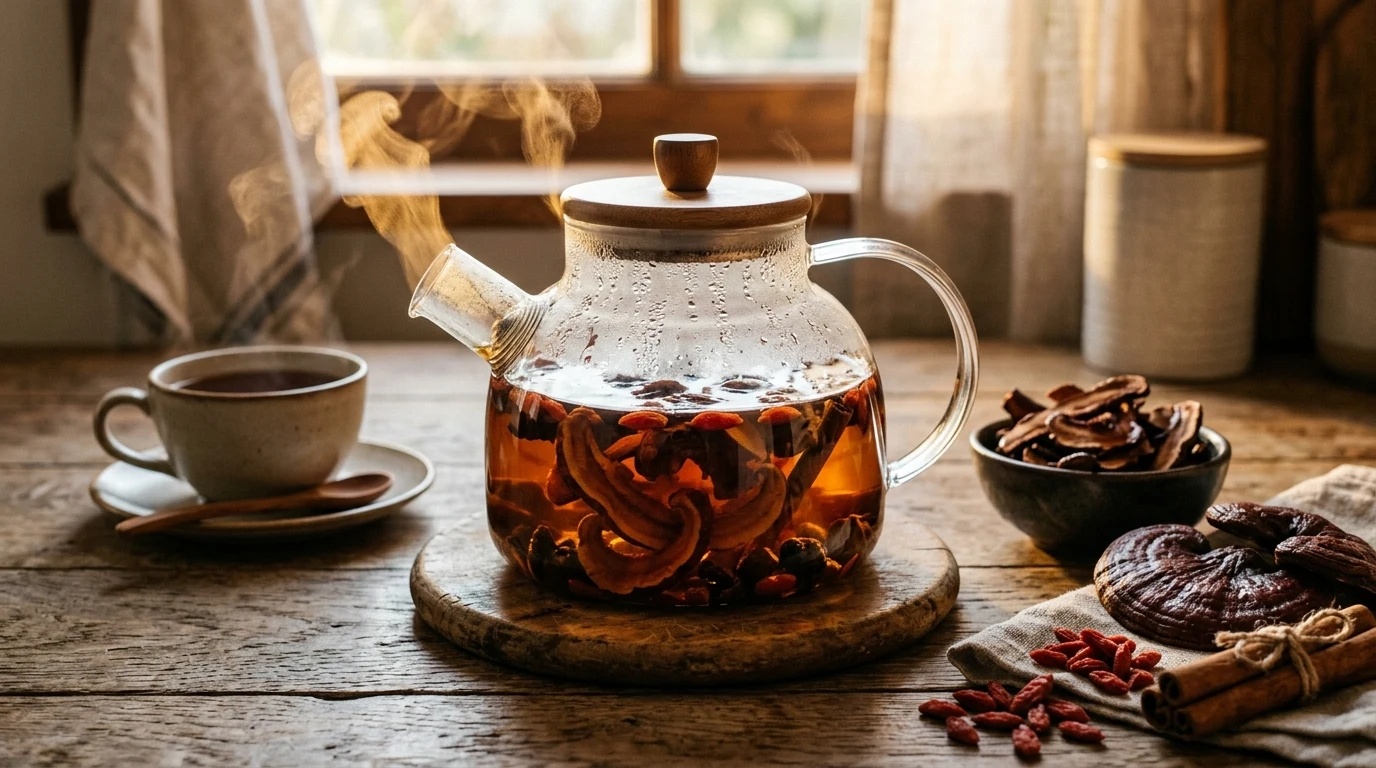
Reishi tea is an ancient medicinal decoction prepared by slowly simmering the dried woody fruiting bodies or mycelium of Ganoderma lucidum (known in Traditional Chinese Medicine as Lingzhi, the “Mushroom of Immortality”) in boiling water to extract bioactive water-soluble beta-1,3/1,6-D-glucans and ganoderic triterpenes that modulate immune system reactivity, reduce systemic cortisol, and promote deep non-REM restorative sleep.
Revered for over 2,000 years in Taoist and imperial texts as the premier superior tonic herb, reishi occupies a foundational pillar in adaptogenic herbalism. Unlike culinary mushrooms such as cremini, shiitake, or oyster mushrooms that feature soft, succulent textures, reishi fruiting brackets are intensely woody, varnished, and tough as leather. Preparing an authentic reishi tea through hot-water extraction is essential to break down its recalcitrant chitinous cell matrices and liberate its therapeutic phytochemicals.
Contents
Phytochemical Architecture: The Two Primary Active Components of Reishi
The remarkable holistic health attributes of reishi tea stem from two distinctly structured classes of natural pharmacologically active compounds:
| Bioactive Class | Primary Molecules | Extraction Requirement | Physiological Health Action |
|---|---|---|---|
| Polysaccharides (Beta-Glucans) | Beta-(1,3)-(1,6)-D-glucan branched chains, proteoglycans | Prolonged hot-water decoction (water-soluble) | Primes macrophages, enhances Natural Killer (NK) cell cytotoxicity, balances cytokine production |
| Oxygenated Triterpenoids | Ganoderic acids (A, B, C, D), lucidenic acids | Alcohol/prolonged heat extraction (partially soluble) | Provides signature bitter taste, lowers histamine release, supports hepatic liver detox, inhibits ACE enzymes |
Clinically Validated Health Benefits of Consuming Reishi Tea
1. Central Nervous System Calming and Slow-Wave Deep Sleep
In traditional Chinese pharmacology, reishi is celebrated for its capacity to “calm the Shen” (nourish the emotional spirit and mind). Modern neurobiology explains this through the modulation of GABAergic pathways. Bioactive ganoderic triterpenes interact with gamma-aminobutyric acid (GABA) neuroreceptors, promoting tranquil sedation without grogginess, reducing latency to sleep, and increasing the overall duration of restorative slow-wave delta sleep.
2. Biphasic Immune System Modulation
Unlike pharmaceutical immune stimulants that can inadvertently exacerbate chronic autoimmune inflammation, reishi acts as a true intelligent biological response modifier (BRM). When the immune system is depressed, its beta-glucans prime white blood cells to combat environmental pathogens; when the immune system is overactive and inflamed, its ganoderic acids suppress excessive histamine release and downregulate inflammatory TNF-alpha and interleukin-6 cascades.
3. Cardiovascular and Hepatic Support
Regular consumption of bitter reishi decoctions promotes healthy vascular tone. Ganoderic acids inhibit squalene epoxidase, helping maintain healthy blood cholesterol ratios while exhibiting natural angiotensin-converting enzyme (ACE) inhibitory activity to support normalized blood pressure levels.
Step-by-Step Guide: How to Brew Medicinal Reishi Tea at Home
Because reishi brackets consist of high-density chitin, simple 3-minute tea bags yield almost no therapeutic value. To prepare genuine, bioavailable reishi tea, execute a traditional sustained decoction:
Ingredients:
- Dried Sliced Red Reishi Mushroom (Ganoderma lucidum): 10 to 15 grams (approx. 4–6 dried wooden bracket slices)
- Filtered Spring Water: 4 cups (approx. 1 liter)
- Synergistic Flavor Harmonizers: 1 stick of Ceylon cinnamon, 1 tablespoon of organic goji berries, or 2 dried red jujube dates
Decoction Instructions:
- Vessel Selection: Use a ceramic, glass, or stainless steel pot. Avoid non-stick cookware or reactive raw aluminum, which can degrade sensitive triterpenic acids.
- Initial Boil: Place the reishi slices and dried dates/cinnamon into the cold water. Bring the liquid to a rolling boil over high heat.
- Sustained Simmer: Immediately lower the heat to a gentle simmer. Cover with a snug lid and let the tea simmer quietly for 45 to 60 minutes. The liquid will reduce to a deep mahogany-brown color, releasing a rich, woody, and intensely bitter aroma.
- Straining & Reusing: Strain the dark tea into a mug or glass pitcher. Do not discard the mushroom slices! Reishi slices can be stored in an airtight container in the refrigerator and simmered a second or even third time before their active compounds are fully exhausted.
- Tempering the Bitterness: Reishi is naturally bitter due to pure ganoderic acids—in herbalism, “bitter is medicinal.” To make it exceptionally enjoyable, stir in a spoonful of raw local honey, unsweetened coconut milk, or brew alongside roasted chicory or organic cocoa nibs.
Recommended Timing and Dosage Protocol
- Standard Daily Dose: 1 cup (250 ml) of concentrated decoction taken 60 to 90 minutes prior to bedtime.
- Consistency: Adaptogens require biological accumulation. Peak immune and neurological benefits emerge after 3 to 4 weeks of regular, uninterrupted evening consumption.
Frequently Asked Questions About Reishi Tea
Why is reishi tea so bitter?
The bitter taste is the definitive hallmark of authentic, potent reishi. It is caused by ganoderic and lucidenic triterpenes—the exact medicinal compounds responsible for liver protection, histamine regulation, and cellular longevity. If reishi tea isn’t bitter, it contains virtually no active triterpenes.
Can I drink reishi tea in the morning?
Yes. While reishi promotes restful sleep at night by stabilizing cortisol and balancing GABA, it is not a sedative drug. Consumed in the morning, it promotes calm, grounded focus and reduces stress-induced adrenal tension throughout the workday.
Does reishi tea interact with prescription medications?
Because reishi has mild natural blood-thinning and hypotensive (blood-pressure-lowering) properties, consult with your physician if you are currently taking prescription anticoagulants, immunosuppressants, or anti-hypertensive drugs.
Get our latest guides, news, and insights highlighted in your Google Search & AI Overviews.


